Celebrity News March 04, 2026
Why Harrison Ford’s Lifetime Achievement Award Speech Was a Master Class in Moments That Matter
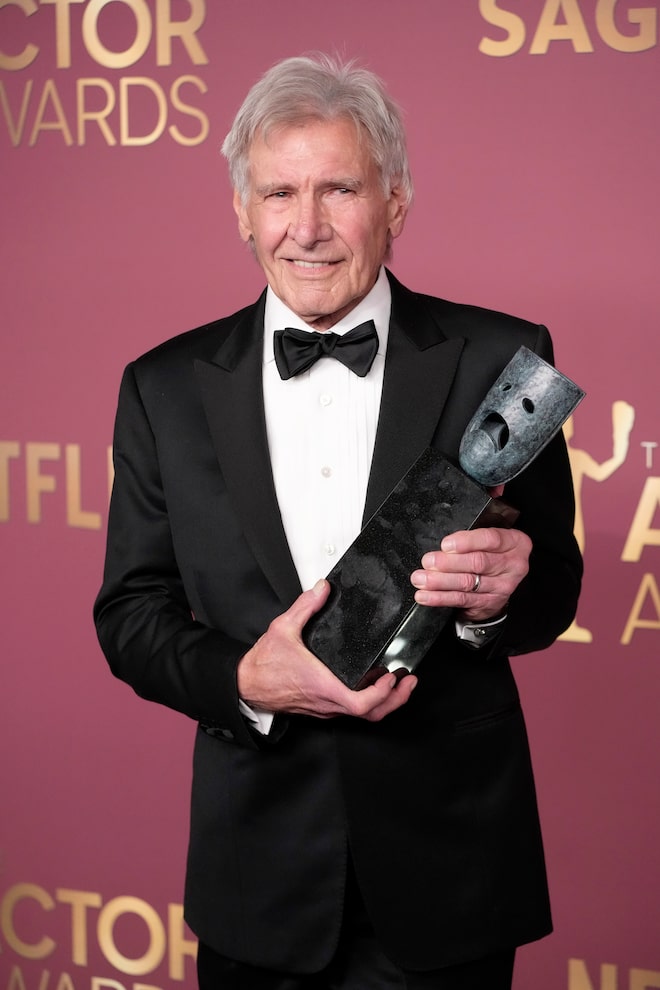 Getty Images
When Harrison Ford stepped onto the stage at the Actor Awards (formerly known as the SAG Awards) to accept a lifetime achievement honor, he didn’t just deliver a highlight reel of his iconic roles in "Star Wars," "Indiana Jones.”
Instead, he proved the central thesis of Chris Dyer’s new book, "Moments That Matter: See, Shape, and Scale What Counts."
Ford didn’t focus on fame. He focused on two people most viewers had never heard of: casting director Fred Roos and his manager Pat McQueeney.
“I would not be here without them,” Ford said. “They’re no longer with us, but it feels important that I thank them now. I feel them here tonight.”
In "Moments That Matter," Dyer argues that less than one percent of our experiences become the memories that define our lives and leadership. A single conversation can reshape a career. A single act of recognition can alter how someone sees themselves. A single decision under pressure can become the story people tell about you for decades.
Ford’s speech was a Recognition Moment in its purest form.
Before he was a global superstar, Ford was a struggling carpenter, bouncing between odd jobs and bit parts. Roos and McQueeney didn’t just offer one opportunity. They were, as Ford described, “incredibly persistent in their support.” The moment that mattered wasn’t a premiere night under bright lights. It was every phone call that said, “I’ve got something for you.”
“Moments that matter aren’t always loud,” Dyer writes. “Sometimes they’re someone refusing to stop believing in you.”
Ford also described failing in college and feeling isolated before stumbling into a theater company. “People I once thought were misfits and geeks turned out to be my people,” he said.
Dyer calls this an Inception Moment. “It’s the first experience that reshapes identity and trajectory. Ford didn’t just find acting. He found belonging. The career followed.”
And then he closed with a challenge. “To keep the door open for the next kid. The next lost boy who’s looking for a place to belong.”
Dyer calls this the Post-Moment effect. “A moment doesn’t end with achievement,” he explains. “It propagates when the recipient becomes the creator. Someone opened doors for Ford. Now he holds doors open for others.”
That’s how cultures are built. Not through grand gestures every day, but through recognizing which days matter most.
In "Moments That Matter," Chris Dyer argues that the moments shaping our lives are rarely the ones with spotlights. They are the ones with resistance. The ones that make our hands tremble. The ones that signal, physically and emotionally, “This matters.”
Ford’s speech wasn’t just a thank-you. It was a master class in Dyer’s core idea: not all moments are created equal. The leaders we remember aren’t the ones who had the most moments.
They’re the ones who showed up fully when the moment arrived.
TMX contributed to this story.